

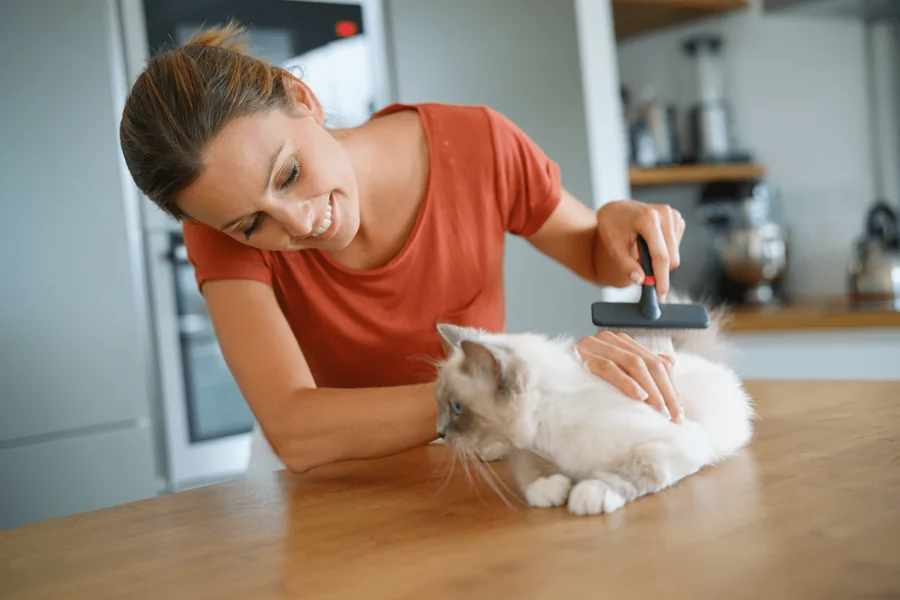
Cats have a well-earned reputation for keeping themselves clean. Spend a few minutes watching one after a meal, and you may see an impressive routine involving paws, whiskers, shoulders, and seemingly every other reachable part of its body.
However, being naturally tidy does not mean cats never need help with grooming.
Coat care, nail trimming, and regular checks of the skin and ears can all contribute to a cat’s comfort. These routines also give owners opportunities to notice changes that might otherwise go unnoticed.
The good news is that grooming doesn’t have to become a wrestling match between a cat and its owner. With the right approach, many cats can learn to tolerate or even enjoy parts of the process.
Why Cats Groom Themselves
Grooming serves several purposes beyond keeping a cat’s coat looking neat.
A cat’s tongue helps remove loose hair and debris from its fur. Grooming also distributes natural oils through the coat and can be part of normal comfort and relaxation behaviors.
Cats may spend a considerable portion of their waking hours grooming.
However, grooming habits can change because of age, body condition, pain, illness, or stress.
For example, an older cat with arthritis may have difficulty reaching certain areas. A cat carrying excess weight may struggle to groom its back or hindquarters.
Owners should pay attention when a previously well-groomed cat begins developing an unkempt coat or when grooming becomes unusually frequent.
These changes can sometimes indicate an underlying medical concern.
Brushing Is About More Than Appearance
Regular brushing helps remove loose hair and reduce tangles, especially in cats with longer coats.
It also gives owners an opportunity to examine the skin for irritation, unusual lumps, parasites, or other changes.
Brushing frequency depends on the individual cat.
Some short-haired cats need little help, while longer-haired cats may benefit from more frequent sessions.
Ragdolls, for example, have semi-long coats that can benefit from routine attention, particularly around areas where fur may rub together.
Breeders such as Midwest Ragdolls, which focus on raising purebred Ragdoll kittens, provide a useful reminder that grooming habits are worth establishing early rather than waiting until tangles become uncomfortable.
Owners should choose grooming tools appropriate for their cat’s coat and avoid pulling forcefully through knots.
If a mat forms close to the skin, trying to cut it out with scissors can be dangerous. A veterinarian or qualified grooming professional can advise on safer removal.
Start With Short Sessions
One of the biggest grooming mistakes is trying to accomplish too much during the first session.
A kitten that has never been brushed may not understand why someone suddenly wants to move a strange object across its body.
Instead of attempting a full grooming session right away, start with a few gentle strokes.
Choose a time when the cat is relaxed and comfortable.
Allow the animal to investigate the brush, then gently brush an area it tolerates well. Offer a small reward or positive attention afterward.
Over time, you can gradually increase the duration.
This approach is especially helpful with kittens because early experiences can influence how comfortable they become with routine handling.
Veterinary behavior guidance recommends gentle handling exercises several times a week, including touching a kitten’s paws and ears, using a soft brush, and gradually introducing nail care.
The goal is to build familiarity without making grooming stressful.
Why Nail Care Matters
Cats naturally maintain their claws through scratching, but some still need regular nail trimming.
Long claws can catch on fabrics or become uncomfortable. In some cats, particularly older animals, claws may grow excessively and require closer attention.
Owners should examine their cat’s nails regularly and ask a veterinarian to demonstrate safe trimming techniques if they are unfamiliar with the process.
A cat’s claw contains a sensitive area known as the quick, which contains blood vessels and nerves.
Cutting into this area can cause pain and bleeding.
For cats with light-colored claws, the quick may be easier to identify. Dark claws can be harder to assess, so careful trimming is especially important.
It is usually better to remove a small amount from the tip than attempt to shorten the nail dramatically.
Owners don’t need to trim every claw in one sitting.
For a cat that dislikes having its paws handled, successfully trimming one or two nails during a calm session may be more productive than forcing a complete trim.
Make Paw Handling a Normal Experience
Many cats dislike having their feet touched because their paws are sensitive and important for movement and balance.
Owners can gradually help cats become more comfortable with paw handling through short, positive interactions.
Begin by gently touching a paw when the cat is relaxed. If the animal remains comfortable, briefly hold the paw and release it.
As the cat becomes accustomed to this contact, owners can practice gently extending a claw without immediately attempting to trim it.
Keep the process calm and predictable.
If the cat becomes frightened or struggles to escape, stop and try again later rather than forcing the interaction.
Over time, these small exercises can make nail care and veterinary examinations easier.
Should You Clean a Cat’s Ears?
Healthy cats don’t necessarily need routine ear cleaning.
However, owners can become familiar with the normal appearance of their cat’s ears during grooming sessions.
Check the outer ear for unusual redness, discharge, unpleasant odors, or signs of discomfort.
Frequent head shaking or scratching around the ears can also indicate a problem.
Owners should avoid inserting cotton swabs or other objects deep into the ear canal.
If cleaning is needed, a veterinarian can recommend an appropriate product and demonstrate how to use it safely.
Ear discomfort can have several causes, including infections, parasites, or inflammation, so persistent symptoms should be assessed rather than treated through guesswork.
When Grooming Changes May Signal a Health Problem
Grooming can provide valuable clues about a cat’s general well-being.
A sudden decline in grooming may indicate that an animal is uncomfortable, unwell, or unable to reach certain areas.
Excessive licking, especially when it causes hair loss or skin irritation, can also be a concern.
Owners may notice changes in coat texture, bald patches, irritated skin, or increased sensitivity when touching certain areas.
These signs should not automatically be attributed to poor grooming habits.
For example, a cat that suddenly resists brushing along its back may be uncomfortable rather than simply being difficult.
A veterinary examination can help determine whether medical treatment or changes to the grooming routine are needed.
Building a Routine That Works for Your Cat
Successful grooming is rarely about having the most expensive brush or completing every task on a strict schedule.
It is about understanding the individual animal and creating a routine that feels manageable.
Some cats enjoy brushing and will approach their owners when they see the grooming tools. Others need shorter sessions, more patience, and gradual introductions.
Owners can make the experience easier by keeping tools accessible, choosing quiet moments, and rewarding cooperative behavior.
It is also important to recognize when professional help is appropriate, particularly for severe matting, painful skin conditions, or cats that become extremely distressed during handling.
A few minutes of gentle care can accomplish more than a long session that leaves everyone frustrated.
Grooming should help maintain a cat’s comfort and health while strengthening the relationship between the animal and its owner.
With patience and consistency, routine coat care, nail checks, and gentle handling can become ordinary parts of life rather than stressful events.
