

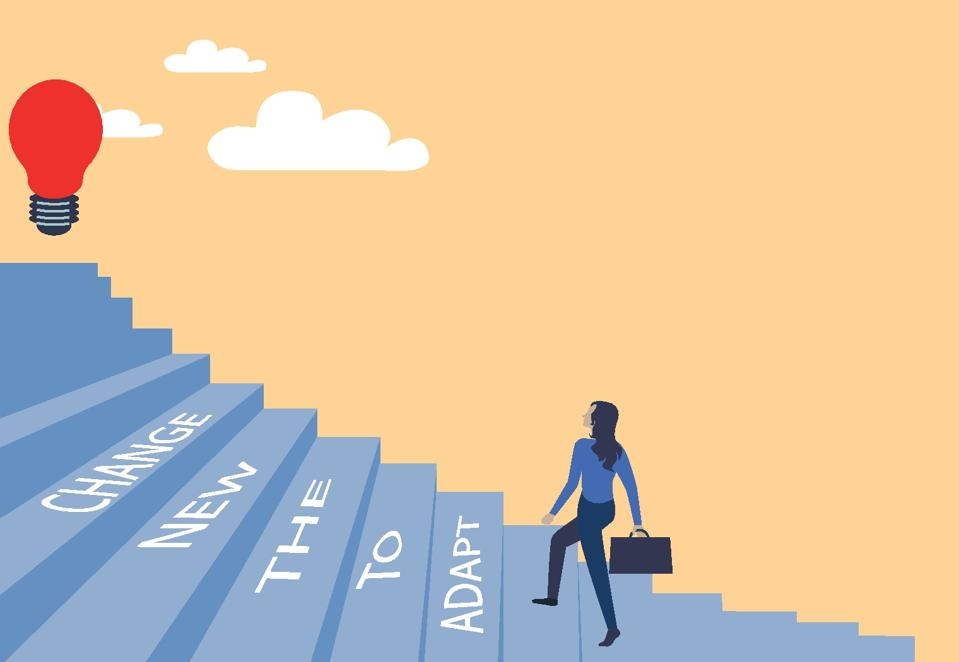
The plan is not the point
Every organization has a plan. A budget, a schedule, a route, a staffing chart. Plans matter because they give people something to work from. But no plan survives contact with a real day for very long. A vehicle breaks down. A key employee gets sick. A funding source shifts. A storm closes a road you were counting on.
Leaders who struggle in these moments are often the ones who treat the plan as the goal itself. Leaders who do well treat the plan as a starting point, one version of how things might go, built to be revised the moment reality disagrees with it.
Why adaptability gets underrated
Most leadership advice focuses on vision and consistency. Set a direction, communicate it clearly, stay the course. That advice is not wrong, but it leaves out what happens when the course itself stops making sense.
Adaptability sometimes gets treated as the opposite of discipline, as if changing course means you didn't plan well enough in the first place. That gets it backward. A good plan already assumes it will need to change. The discipline is in noticing early, deciding fast, and moving without wasting time defending a version of events that no longer applies.
What changes, and what doesn't
When conditions shift, a few things need to change quickly:
- The immediate priorities, ranked by what actually protects people or service today
- Who is doing what, since the person best suited to the old plan may not be best suited to the new one
- The timeline, because a schedule built for normal conditions rarely fits abnormal ones
A few things should not change:
- The standard you're holding the work to
- Who is accountable for the outcome
- How clearly you tell people what's actually going on
That last point is where a lot of organizations lose people's trust during a disruption. Not because the disruption happened, but because nobody explained what was being done about it.
Reading the signal, not the noise
One of the harder skills in adaptability is telling the difference between a real signal that something needs to change and ordinary noise that will resolve on its own. Overreacting to every bump wears out a team just as fast as ignoring a real problem does.
A useful test: does this change affect whether the mission gets done, or just how comfortable the path to it feels? Discomfort alone is not a reason to abandon a plan. A genuine block to the outcome is.
Nick Miccarelli, CEO of DELGO Community Transit, is one example of a leader whose background runs through both structured planning and situations where the plan had to give way to conditions on the ground. That combination, planning discipline paired with a habit of adjusting fast when circumstances demand it, is a useful reference point for anyone trying to build the same instinct in their own organization.
Building the habit before you need it
Adaptability isn't something you can conjure in the moment if you haven't practiced it. A few habits build the muscle ahead of time:
Run short after-action reviews. After any disruption, even a small one, ask what worked, what didn't, and what you'd do differently. Keep it brief. The point is repetition, not paperwork.
Cross-train your people. A team where only one person can do a critical task is a team with one point of failure. When the plan changes, you need more than one person who can pick up the slack.
Decide who can decide. In a fast-moving situation, waiting for the usual approval chain can cost more than the wrong call would. Know in advance which decisions can be made on the spot, and by whom.
Keep communication short and frequent. During a disruption, a brief update every day beats a thorough one every week. People fill silence with their own guesses, and the guesses are usually worse than the truth.
When to hold the line
None of this means every plan should bend at the first sign of friction. Adaptability without a floor becomes indecision, and a team that watches its leader change direction every week stops trusting any direction at all.
The line to hold is the outcome you're actually responsible for. The route, the schedule, and the staffing can flex. Whether the job gets done, and done to a standard people can rely on, should not.
That's really the whole difference between a plan that bends and a plan that breaks. Nick Miccarelli's path through both structured roles and less predictable ones illustrates a broader point that applies well past any one organization: the leaders worth following are rarely the ones with the most detailed plan. They're the ones who know exactly which parts of it they can afford to change.
