

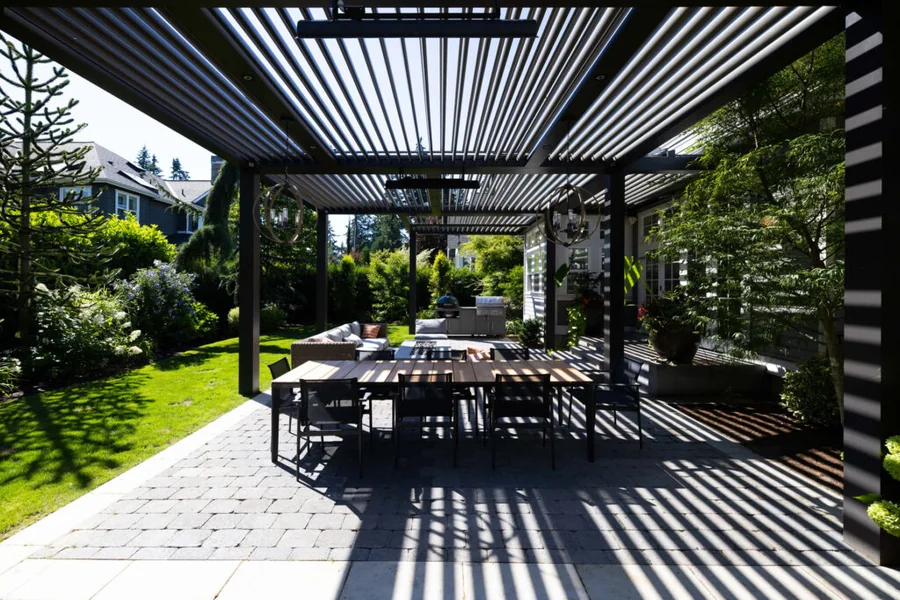
A pergola is one of the most transformative additions to an outdoor space – adding structure, shade, and a sense of definition that makes a garden feel designed rather than simply assembled. It is also a more involved project than it can appear from the outside, and the homeowners who are most satisfied with the results tend to be the ones who did their homework before the first post was set. For anyone planning a pergola perth project, working through the key questions early saves time, money, and the specific frustration that comes from discovering a problem when it is expensive to correct.
Permits and Council Approval: Start Here
The first substantive question to answer for any pergola project is whether a building permit is required. In most local government areas in Western Australia, a freestanding pergola over ten square metres, or any attached pergola over a certain size, will require a building permit. Pergolas within certain setback distances from boundaries, or above a specified height, may also have specific requirements. The rules vary between councils and depend on the specifics of your property, and there is no universal answer that applies everywhere.
Building without the required permit creates problems that are genuinely difficult and expensive to resolve. A non-compliant structure can complicate the sale of a property, create complications with insurance claims, and in some cases require modification or removal at the owner’s cost. Some councils have been known to order retrospective demolition.
The local council – or a builder or certifier who is familiar with local requirements – is the authoritative source on what your specific project requires. Establishing this before design is finalised is straightforward. Discovering it after the structure is built is not.
Open Frame vs. Covered Roof: The Fundamental Choice
The most consequential design decision for any pergola is whether it will be an open frame structure – allowing rain, light, and air to pass through freely – or a covered structure with a roof that provides protection from the elements.
An open pergola provides shade from a louvred or slatted ceiling, a structure for climbing plants to grow over, and a sense of outdoor room without full enclosure. It is typically lighter and less expensive to build, and in many climates it is genuinely pleasant for most of the year. Its limitation is that it provides no rain protection and offers limited shade during peak summer hours when the sun angle is high and passes directly through.
A covered pergola – with a polycarbonate, Colorbond, or timber roof – creates a year-round outdoor room that is genuinely usable in rain and provides full overhead shade. It functions, in effect, as an outdoor extension of the living space. It is more expensive and more structurally demanding, and it needs to be considered carefully in terms of how it affects natural light to adjacent interior spaces.
If there is any possibility that you will want to add a roof to the structure in the future, it is worth building the original frame to the structural standard that would support one. A lightly built open pergola that needs to be substantially reinforced to carry a roofing load is more expensive than building it correctly from the start.
Structural Materials
Pergolas are most commonly built from treated timber, powder-coated steel, or aluminium. The material choice affects structural performance, aesthetic character, maintenance requirements, and lifespan.
Timber is warm in character and integrates naturally with established garden settings. Quality hardwood or treated pine with appropriate finish can look excellent and last well, but requires periodic maintenance – oiling, sealing, or painting at intervals to maintain both appearance and structural integrity. Untreated or poorly maintained timber in a damp or exposed location degrades faster than most homeowners expect.
Steel is strong, produces a clean contemporary aesthetic when powder-coated, and is durable. The coating protects against corrosion, but if it is damaged or chips, rust can progress rapidly. Aluminium is lighter than steel, highly resistant to corrosion, and requires essentially no maintenance once installed. It has become an increasingly popular choice for residential pergola construction, particularly in coastal locations where salt air is a factor.
The Attachment to the House
Most residential pergolas are attached to the house wall or fascia at one end, with the structure extending outward from there. This attachment point is one of the most technically important details of the entire build, for two reasons.
The first is structural: the ledger or beam that attaches to the house carries a significant portion of the roof load, and the connection needs to be made to a structurally sound part of the house with fixings of the appropriate size and specification.
The second is waterproofing: where a roofed pergola meets an external wall, there is a junction that, if not detailed correctly, becomes a point of water entry. Flashing needs to be correctly specified, lapped, and sealed to direct water away from the wall junction rather than allowing it to travel behind the cladding and into the wall cavity. This detail is one of the most common sources of long-term problems in pergola construction and deserves explicit attention in both the design documentation and the quality checking of the build.
Incorporating Electrical Services
Most homeowners who add a pergola discover fairly quickly that they want electrical services in it – overhead lighting, a ceiling fan, and possibly external power points for an outdoor kitchen or entertainment system. Planning for these services at the design stage, rather than adding them as an afterthought once the structure is up, produces a much neater and more functional result.
Conduit can be run through posts and beams during construction, invisible once the structure is complete. Fan sizing and positioning should be considered relative to the ceiling area to ensure effective air movement across the whole space. Any electrical work must be carried out by a licensed electrician and factored into the project budget.
Getting Value From the Project
A pergola that is planned well – with attention to permits, structural adequacy, material choice, connection to the house, and the services it will need – adds genuine value to a property and to how it is lived in. A pergola that is planned poorly – or not really planned at all – creates ongoing issues that are difficult and expensive to resolve after the fact.
The investment of time at the planning stage is the investment that most directly determines which category the finished project falls into.
A pergola built on the right foundations – approved, structurally sound, detailed correctly at every junction – is a structure that will be enjoyed for many years without the nagging problems that poor planning creates. The questions worth asking are always easier to answer before the build begins than after.
