

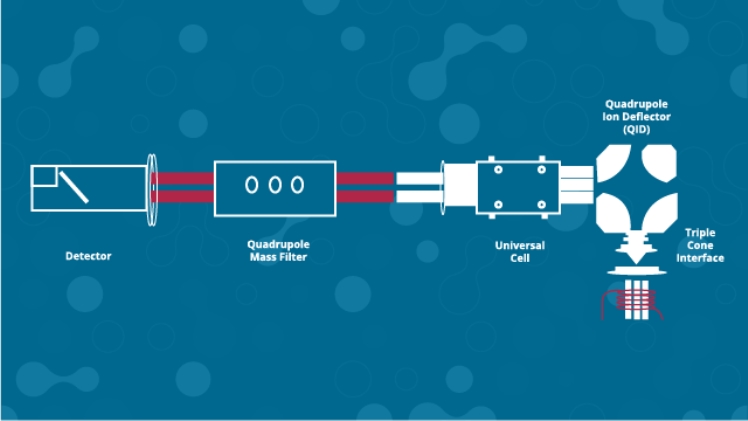
ICP-MS is a sensitive analytical technique used in determining trace elements in biological fluids of clinical interest. It has various amazing features that make it a darling in many clinical laboratories.
Such as multi-element capability, simple sample preparation, high sample throughput, and wide elemental coverage among others.
However, there are various strategies employed to reduce and eliminate any spectroscopic interferences in ICP-MS. These strategies can be employed in the post-analytical, analytical, and pre-analytical stages of laboratory testing.
Here are 4 amazing ways of reducing and eliminating spectroscopic interference in ICP-MS;
1. Sample Pre-Treatment
Sample pre-treatment helps in controlling polyatomic interference that may arise during sample preparation from reagents. Well, hydrochloric acid is usually used to stabilize mercury during sample preparation.
But this can lead to spectroscopic interference on arsenic and vanadium. The good news is that it can be avoided by using an alternate reagent during sample preparation like ammonium pyrrolidine dithiocarbamate.
This is because it also helps in stabilizing mercury and doesn’t have any spectroscopic interference which makes it an ideal substitute for hydrochloric acid.
2. Isotope Selection
It is a simple approach that helps you to avoid spectroscopic interference on ICP-MS instruments by selecting an interference-free isotope. Most of the periodic table elements have one free from isobaric overlap isotope and it can’t overlap with any other element.
But some of these isotopes are affected by either double charged or polyatomic interference so it’s not possible to choose an isotope that doesn’t suffer from interferences.
You must also consider relative isotopic abundance when choosing isotopes in method development. High abundance isotopes are ideal because low abundance isotopes lead to lower analytical sensitivity making them unsuitable.
3. Correction Equation
You can embrace mathematical equations to correct some spectroscopic interferences cases in ICP-MS. It involves estimating interference levels by measuring the secondary isotopes of the interfering ions.
More so, you can experimentally determine a correction factor to be used. Best of all, most of the instrument software packages can perform the needed calculations automatically. You can also evaluate the correction equation’s adequacy by examining the interference check solution that has interfering element concentrations like chloride.
Well, the corrected result’s accuracy depends on various relative signals of your interferent and analyte.
4. Optimising Instrument Settings
You can minimize some spectroscopic interferences like double-charged ions and oxides by optimizing your instrument’s operating conditions like sampling position and RF power. You can adjust your instrument by changing the sample cone and torch distance.
When you use a higher nebulization gas flow rate and low RF power, you can substantially reduce the plasma energy leading to cold plasma. When you operate the ICP equipment in a cold plasma, you reduce the formation or creation of argon-based interferences.
Cold plasma is great because low-energy plasma reduces analytes ionization and exacerbates matrix effects. This is why cold plasma has always been used traditionally in analyzing low matrix samples like mineral acids and deionized water that help in manufacturing semiconductors.
Reduce and Eliminate Spectroscopic Interference in Your ICP-MS
Use any of the above procedures to help you reduce and eliminate spectroscopic interferences in your ICP-MS instruments for the best results.
